
Now Reading: No more ‘goodwill’
-
01
No more ‘goodwill’

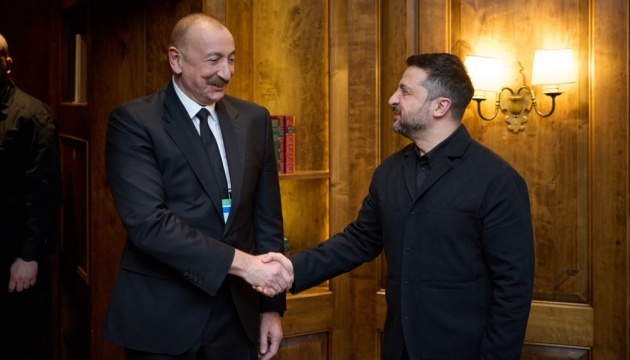
President Ilham Aliyev spoke at the Munich Security Conference directly and without diplomatic courtesies: Azerbaijan’s embassy in Ukraine was struck three times. After the first strike, he said, it might still have been possible to assume an accident. However, precise coordinates of all Azerbaijani diplomatic facilities — the consular section, the cultural center, and the embassy itself — were then transmitted to the Russian side. And what happened next? Two more strikes followed.
Aliyev stressed that this was a deliberate attack on Azerbaijan’s diplomatic missions. Baku views the shelling of its embassy in Kyiv by the Russian side as an unfriendly act.
These words stirred Moscow. Russia’s Foreign Ministry moved to contain the situation — verbally. Officials said they received Aliyev’s statement “with bewilderment,” claiming everything had been misunderstood.
The Russian side once again referred to earlier “clarifications” and expressed regret over the damage, asserting that it could allegedly have been caused by the fall of a Ukrainian Patriot air-defense missile. On Smolenskaya Square, officials assured that when planning strikes they “take into account the location of diplomatic facilities” and rule out intentional damage.
And immediately — a new message. Russian Deputy Foreign Minister Mikhail Galuzin, in an interview with TASS, said that Baku could make a “gesture of goodwill” by releasing eleven Russian citizens.
“A corresponding decision by Baku regarding our citizens could become a gesture of goodwill in the spirit of good-neighborliness,” he said, adding that “the swift release of Russians is an unconditional priority.”
It should be recalled that these are Russian citizens accused of drug trafficking and cyber fraud. What is surprising is not the request itself, but the context. After three strikes on an embassy, after the downing of the AZAL aircraft, after targeted and demonstrative attacks against our compatriots in Russia, calls for “goodwill” are being voiced. What kind of goodwill is being discussed?
President Aliyev, as practice shows, does not voice unverified facts. His statements are based on concrete information. And the very fact of three strikes after the transfer of coordinates has not been substantively refuted in Moscow. The reasons for pressure at that time were obvious. Moscow was trying to “quiet” Baku amid questions surrounding the AZAL plane crash, hoping Azerbaijan would close the issue. The opposite happened — Baku’s position became even more principled. Attempts to justify the strikes today look unconvincing. The reputational losses for Russian diplomacy have long become systemic, and another round of “clarifications” does not save the situation.
Baku’s real goodwill is manifested elsewhere. Azerbaijan is still waiting for obligations to be fulfilled and for answers regarding the plane crash — including those mentioned by President Putin during his meeting with Aliyev in Dushanbe at the end of the year, and even after the controversial decision by the head of Russia’s Investigative Committee, Alexander Bastrykin, to close the criminal case on the crash. Despite all this, Azerbaijan has not appealed to an international court. That is the maximum goodwill.
At the same time, last week Galuzin met in Moscow with Azerbaijan’s ambassador Rahman Mustafayev. Following the meeting, Russia’s Foreign Ministry reported a “principled commitment to further developing ties in accordance with the 2022 Declaration on Allied Interaction” and discussed contact schedules. Notably, it is Moscow’s own provocative and scandalous steps that have effectively undermined the spirit of that declaration.
In the current crisis, Baku is not to blame. It was caused by aggressive and short-sighted decisions from Moscow. And this concerns not only Azerbaijan–Russia relations. In recent years, Russia has plunged into a series of destructive actions: war against Ukraine, strikes on peaceful cities, mobilization and deaths among indigenous peoples, economic degradation, propaganda attacks on post-Soviet countries, and chauvinistic arrogance.
Against this backdrop, the meeting held on February 14 in Munich between President Aliyev and President of Ukraine Volodymyr Zelensky became particularly symbolic. The sides discussed expanding cooperation, including in the energy sector. Zelensky thanked Azerbaijan for its humanitarian support, especially for its attention to Ukrainian children.
The presidents exchanged views on the prospects for bilateral relations. Shortly after the talks, Volodymyr Zelensky’s team published a video from the meeting accompanied by the instrumental track Close to Life.
The composition contains no words — only a tense yet bright musical line. The very title, “Close to Life,” sounds symbolic amid the ongoing war, serving as a reminder of the value of support, diplomacy, and the aspiration to return the country to peaceful life.
Today, more and more countries want to live sovereignly and independently. And increasingly, it is Moscow that becomes a factor hindering this. Therefore, the need for a firm and open position has never been more urgent — to stop remaining silent and defend one’s interests the way Baku does. It is precisely Moscow’s defeat in the war that will open this path for many nations that have become victims of Russian chauvinism and arrogance.
Maqsud Salimov
Related Posts


Previous Post
Next Post


- Aliyev says Turkic world is emerging as a major center of influence

- Baku hosts Turkic World Week honouring landmark 1926 Turkological Congress

- EU envoy holds talks in Baku ahead of high-level engagement with South Caucasus

- Europe must not lose Azerbaijan: Oleksiy Goncharenko on the risks of confrontation between Baku and the Council of Europe

- A leader forged by patience and victory
