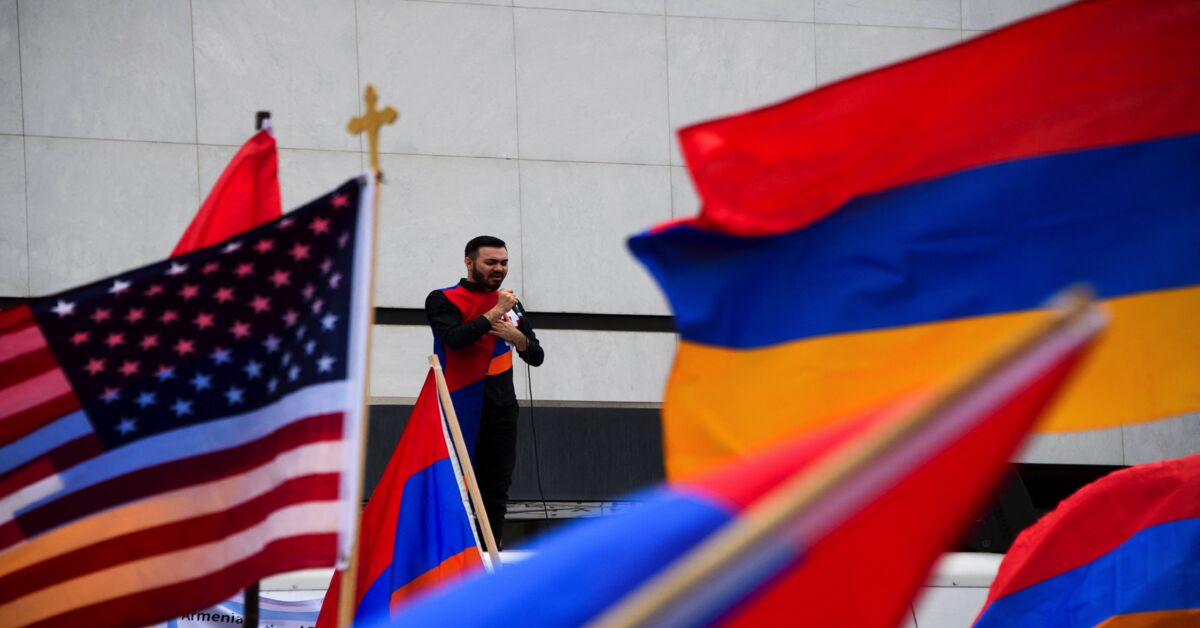
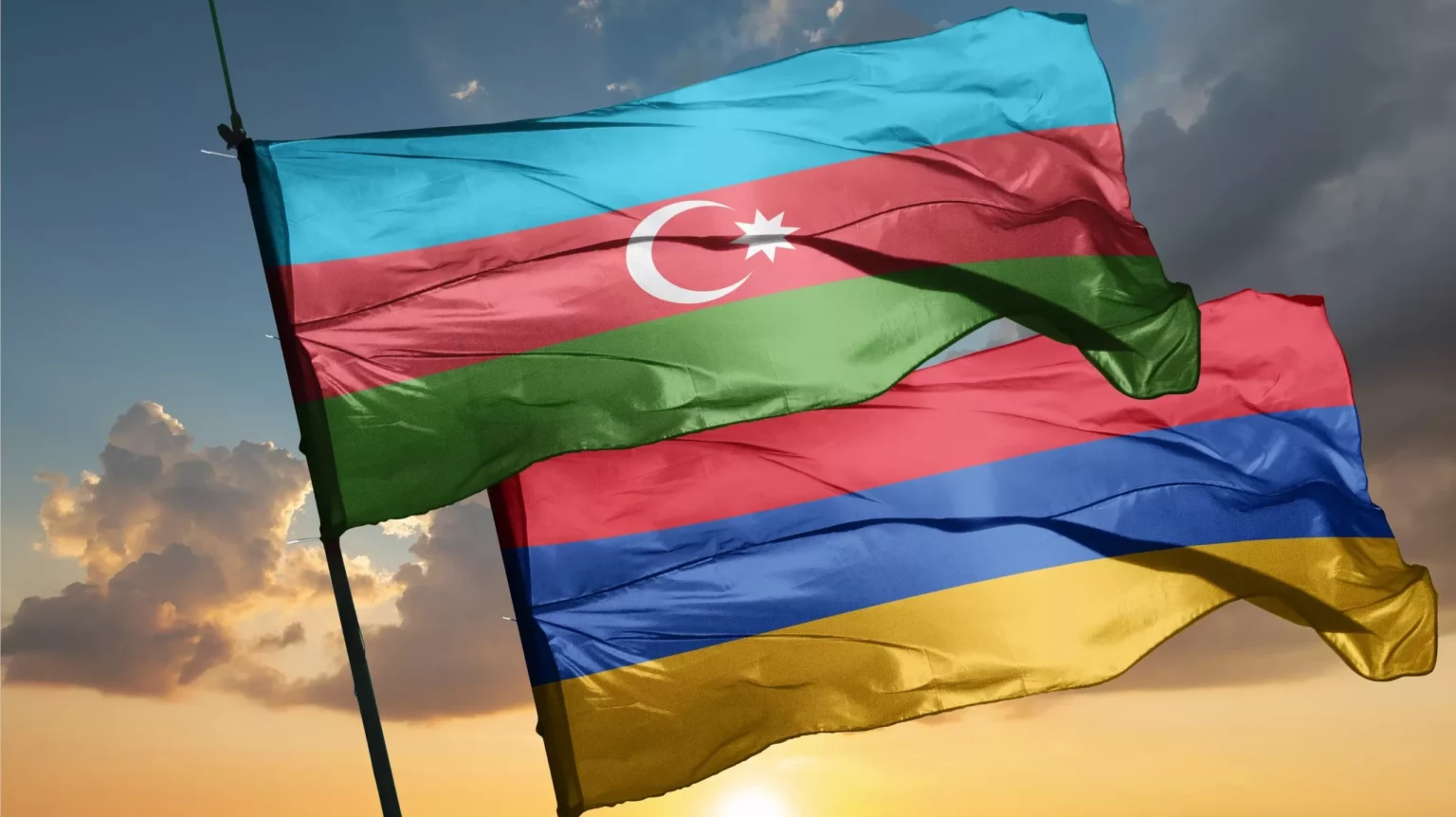
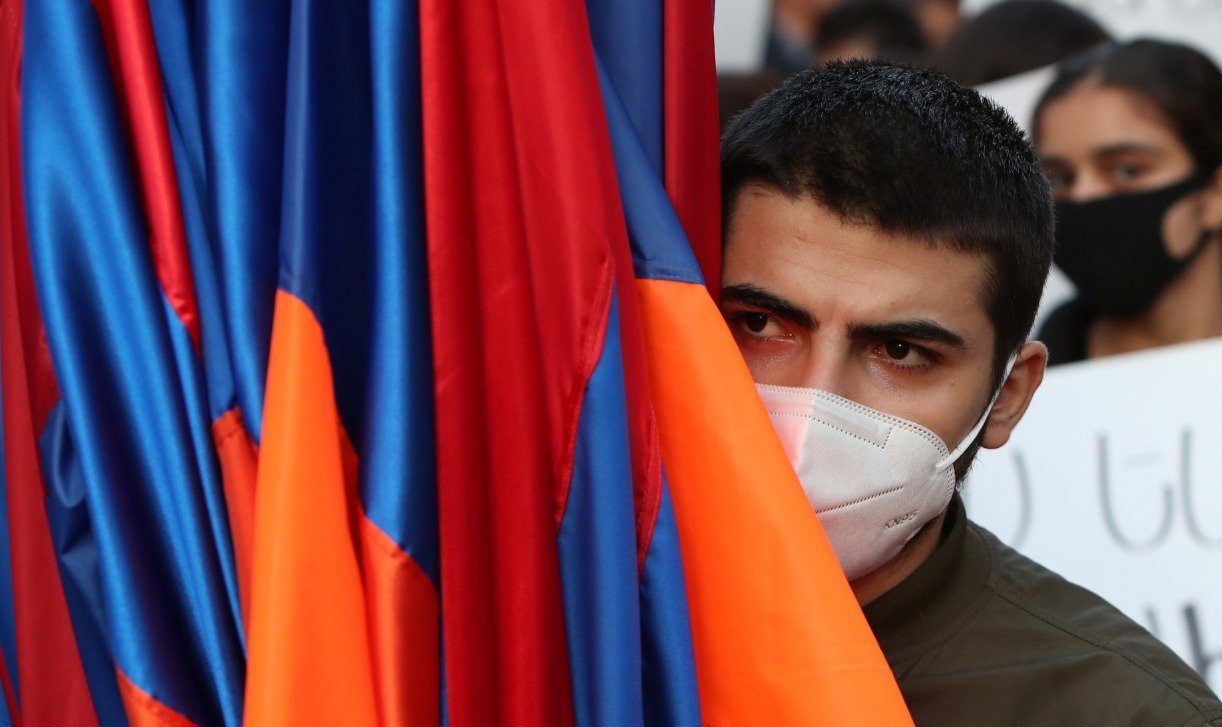
The US supports Armenia’s government ahead of key elections, fearing Pashinyan's defeat by pro-Russian forces would upend peace efforts.
Backup supplies from SOCAR are giving Egypt and Jordan alternatives when Israeli gas exports are disrupted, while keeping Israel linked to regional customers that may avoid direct purchases.
Trump administration officials are in talks with Azerbaijan to fine-tune deals with the leaders of a Western-friendly Caspian state that offers potential land-based Asia-to-Europe connections that would bypass Russia, Iran and the still-closed Strait of Hormuz.
Against the backdrop of the current ceasefire and ongoing negotiations between Tehran and Washington, Iran appears to be trying to make maximum use of this pause to form a kind of “coalition of the dissatisfied” — states that are not ready to unconditionally accept the American vision for the future of the Middle East.
A week before Armenia’s parliamentary elections, scheduled for June 7, two American outlets at once reminded Western audiences of the case of former International Criminal Court chief prosecutor Luis Moreno Ocampo and his role in the campaign against Prime Minister Nikol Pashinyan.
Following the EAEU summit held in Astana on May 29, a joint statement was issued by the presidents of Russia, Vladimir Putin; Belarus, Alexander Lukashenko; Kazakhstan, Kassym-Jomart Tokayev; and Kyrgyzstan, Sadyr Japarov, regarding the situation surrounding Armenia’s aspiration to integrate with the European Union.
On May 28, Azerbaijan’s Independence Day, President Ilham Aliyev, following what has already become an established tradition, visited the liberated territories of the Karabakh Economic Region, where he took part in the opening of a number of infrastructure, cultural and industrial facilities.
It seems that during Armenia’s election campaign, the main candidates for prime minister have simply forgotten about Armenia.
For almost an entire week, leading urban development specialists gathered in Baku to discuss the prospects for modern cities, sustainable infrastructure and global urban policy.
The Russian media cesspit Tsargrad, which is blocked in Azerbaijan, has produced yet another Telegram piece in its death throes, titled: “‘We Were Deceived’: Where Did Russia Miscalculate with Armenia?”
Armenia is building closer relations with the EU, underlining Russia’s diminishing influence in the South Caucasus.
There is one remarkable genre of political theatre in modern international politics. It is when former empires step onto the stage dressed in the white robes of moral arbiters of humanity, lecture the world about human rights, the freedom of peoples and international law, and then, as soon as the spotlights go out, cling to their overseas territories as if they were the last suitcase full of family silver.
In history, as in biology, alliances between peoples and states rarely arise by chance. They are born out of a deep convergence of strategic interests, cultural affinity and historical memory.
During his official visit to Georgia in early April this year, Azerbaijani President Ilham Aliyev stated that Tbilisi and Baku support each other’s territorial integrity, sovereignty and inviolability of borders in all international organizations.
Today, May 15, an informal summit of the heads of state of the Organization of Turkic States is taking place in the ancient city of Turkestan, Kazakhstan.
Another anti-Azerbaijani provocation has been launched in Germany.
It has already become a good tradition that on the birthday of National Leader Heydar Aliyev, President Ilham Aliyev visits the liberated territories and not only reviews the progress of construction work, but also delivers important political messages.
On May 9, at the Russian Embassy in Yerevan, amid the clinking of glasses, the smell of brandy and routine toasts to the “eternal friendship of peoples,” a rather curious figure appeared: the “speaker of the parliament of Artsakh,” acting “president” of an illusory entity, Ashot Danielyan.
Against the backdrop of approaching parliamentary elections in Armenia, statements are increasingly appearing in the Russian information space in which Azerbaijan is once again portrayed as a potential threat to Armenian statehood and public stability.
The situation around Iran and the Strait of Hormuz continues to develop according to an increasingly unpredictable scenario.
France continues to demonstrate complete disregard for the norms of international law and diplomatic ethics, sinking ever lower into open sabotage against Azerbaijan on international platforms.
There is yet another stir in Armenia’s revanchist circles. David Ishkhanyan has reminded everyone of himself.
The 8th summit of the European Political Community and the first Armenia–EU summit, recently held in Yerevan, were portrayed by Armenian political and media circles as a historic diplomatic triumph.
Official Paris has once again started talking about “Nagorno-Karabakh,” as if nothing had happened in recent years.