
Now Reading: Caspian escalation raises stakes for Central Asia
-
01
Caspian escalation raises stakes for Central Asia

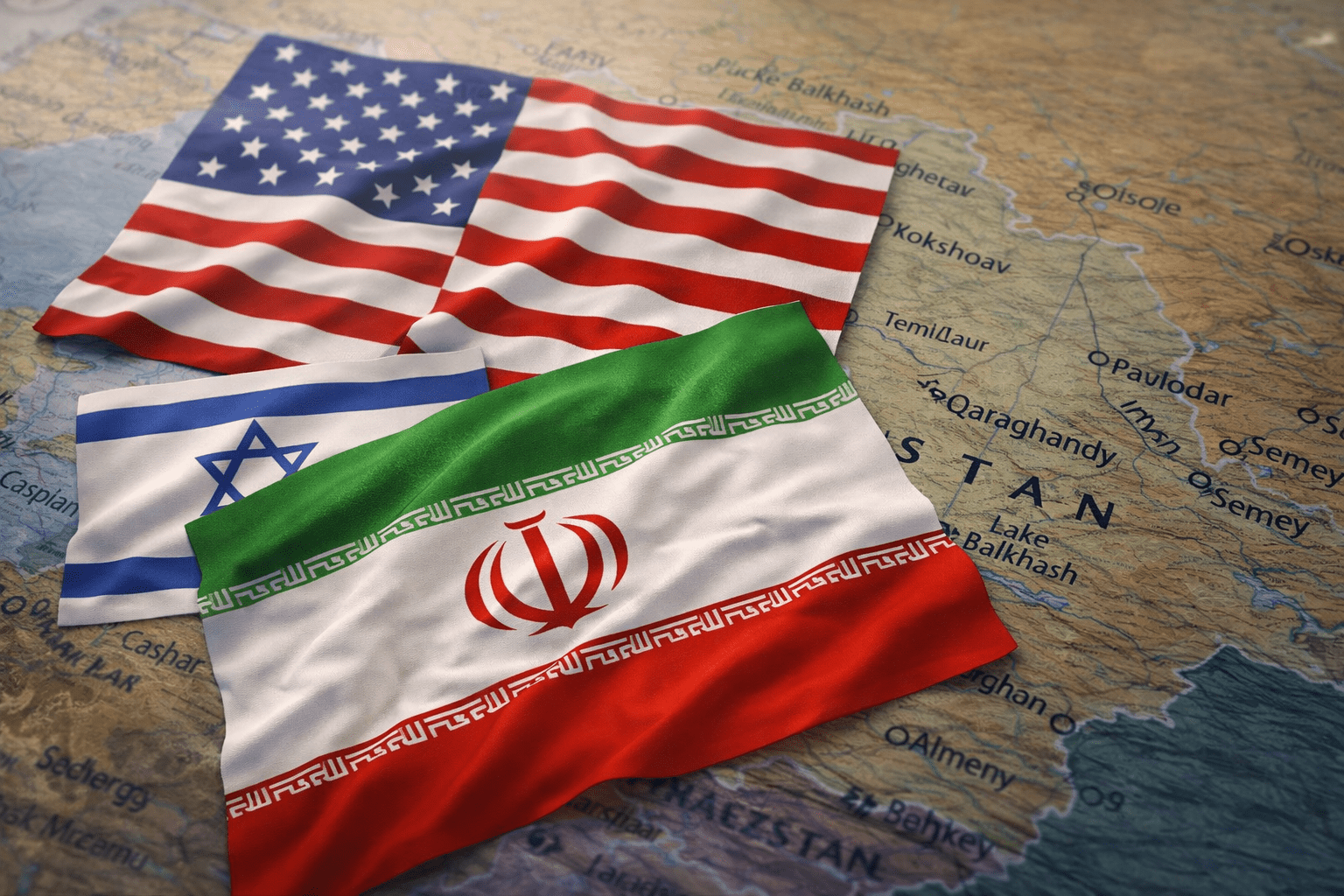
Central Asia, which has increasingly sought to present itself as a coordinated actor on the global political stage, has until recently maintained a cautious, non-aligned stance regarding the escalation in the Middle East. However, attacks affecting infrastructure in the Caspian region have altered the diplomatic balance.
The Caspian Sea is a critical transit zone for Central Asia, linking Kazakhstan and Turkmenistan to Azerbaijan and onward to European and Middle Eastern markets. It forms part of key east–west and north–south trade corridors that have gained importance since Russia’s war in Ukraine disrupted traditional transit routes.
In recent years, regional dynamics have also been shaped by Azerbaijan’s growing engagement with Central Asian states, including its formal inclusion in the expanded Central Asian consultative format, which has effectively evolved from the C5 into the C6. Baku has played an important role in regional connectivity. It has developed close relations with both Turkey and Israel, factors that influence geopolitical calculations in the Caspian basin, which directly borders Kazakhstan and Turkmenistan. This growing alignment has reinforced efforts to develop the Middle Corridor across the Caspian, linking Central Asia to Europe via the South Caucasus.
Turkey maintains political, economic, and cultural influence in Kazakhstan, Kyrgyzstan, and Uzbekistan through the Organization of Turkic States. Russian political discourse has at times portrayed this cooperation as part of a broader pan-Turkic geopolitical project, a characterization widely dismissed by officials and analysts in Central Asia. Nevertheless, Astana and Baku continue to maintain strong relations with Ankara, a development that has periodically caused concern in Moscow.
Under President Kassym-Jomart Tokayev, Kazakhstan has also strengthened ties with Gulf states. Qatar, Kuwait, the United Arab Emirates, and Saudi Arabia have become significant investors in the country’s economy. In this context, Iranian attacks on Gulf states not directly involved in the conflict have shaped Astana’s diplomatic positioning during the current crisis. Reports of drone attacks widely blamed on Iran targeting the Azerbaijani exclave of Nakhchivan have further heightened regional tensions.
At the initial stage of the escalation, Kazakhstan’s response was largely limited to diplomatic contacts with regional leaders. At the same time, several Central Asian countries, along with Azerbaijan, expressed concern over the humanitarian consequences of the conflict and began dispatching aid to Iran. Azerbaijan sent nearly 30 tons of food and medical supplies on March 10, followed by another 82 tons of humanitarian aid on March 18. Uzbekistan delivered approximately 120 tons of humanitarian supplies, including flour, vegetable oil, sugar, and canned food, according to regional media reports. Turkmenistan also sent humanitarian aid consisting of medicines, medical supplies, and other goods, primarily intended for children. The Tajik government reported sending a convoy of 110 heavy trucks carrying humanitarian cargo to Iran, with a total weight of 3,610 tons.
The diplomatic environment shifted further after Israeli air strikes on March 18 targeting Iranian naval facilities in the Caspian Sea. According to Israeli military statements cited by international media, the targets included a major port of the Iranian Navy, where, reportedly, “dozens of ships were destroyed,” as well as “the central command post of the Iranian Navy and infrastructure used for the repair and maintenance of Iranian military vessels.”
The basin is also central to regional energy flows, with offshore infrastructure, shipping routes, and pipeline-linked export systems connecting Caspian producers to global markets. Any expansion of conflict into this space raises risks for both energy exports and maritime transport.
Security in the Caspian basin is a shared concern for both littoral states and their regional partners. According to analyst Denis Borisov, Iran’s Caspian transport infrastructure forms part of regional corridors used by Central Asian states, making stability in the basin strategically important.
Kazakhstan, one of the five Caspian littoral states, began actively signaling support for de-escalation shortly after the strikes. On March 21, speaking in the Turkestan region, President Tokayev called for an end to attacks on civilian and economic targets and urged parties to engage in negotiations. He reiterated Kazakhstan’s readiness to host potential peace talks.
On March 22, the presidents of Kazakhstan and Iran exchanged congratulatory messages on the occasion of Eid al-Fitr and Nauryz. Tokayev expressed hopes for strengthened unity and stability in the Middle East.
Diplomatic contacts intensified on March 23, when Azerbaijan’s Foreign Minister Jeyhun Bayramov held a telephone conversation with his Iranian counterpart Seyed Abbas Araghchi to discuss regional developments and possible steps toward reducing military tensions, including the need to maintain security in the Caspian region.
On the same day, Turkmenistan’s Foreign Minister Rashid Meredov also spoke with Araghchi. Iranian readouts of the call warned that recent strikes could have security and environmental consequences for the Caspian Sea.
Also on March 23, Tokayev received the United Arab Emirates Ambassador to Kazakhstan, Mohammed Said Mohammed al-Ariqi. During the meeting, Tokayev expressed concern over Iranian bombardments targeting the UAE, reiterated Kazakhstan’s opposition to involving neutral states in the conflict, and once again offered Kazakhstan as a platform for peace talks.
The escalation affecting the Caspian region has therefore acted as a catalyst for intensified diplomatic engagement by Central Asian states and Azerbaijan aimed at steering the crisis toward dialogue. As Tokayev has suggested, such efforts may prove critical before the window for negotiated solutions narrows. As the conflict edges closer to key transit and energy routes, the stakes for Central Asia are no longer peripheral, but immediate.
Andrei Matveev is a journalist from Kazakhstan.

Related Posts


Previous Post
Next Post


- Aliyev says Turkic world is emerging as a major center of influence

- Baku hosts Turkic World Week honouring landmark 1926 Turkological Congress

- EU envoy holds talks in Baku ahead of high-level engagement with South Caucasus

- Europe must not lose Azerbaijan: Oleksiy Goncharenko on the risks of confrontation between Baku and the Council of Europe

- A leader forged by patience and victory
