
Russian Deputy Prime Minister Alexey Overchuk has arrived in Azerbaijan on a working visit, where the next meeting of the intergovernmental commission on economic cooperation will take place on April 16.


Russian Deputy Prime Minister Alexey Overchuk has arrived in Azerbaijan on a working visit, where the next meeting of the intergovernmental commission on economic cooperation will take place on April 16.

Azerbaijan would not enter the conflict, but it would actively manage its consequences.

Azerbaijan and Russia have reached an agreement on settling the consequences of the tragedy involving the crash of an AZAL aircraft in December 2024, including the payment of compensation to the families of the victims and those affected, according to a joint statement.
![A zoomed in view of the waterfront promenade running along the shores of the Caspian Sea, Baku, Azerbaijan. [Photo via Getty Images]](https://aze.media/wp-content/uploads/2024/03/GettyImages-1178395339-e1723534011484.webp)
The Emirates' non-oil trade with Central Asian nation has risen 31 per cent in past two years to exceed $2.2bn

Azerbaijan was the largest exporter of oil to Czechia last year, accounting for more than 42 percent of the latter’s total oil imports, according to data released by the Czech Ministry of Industry and Trade on Wednesday.

The 13th session of the World Urban Forum (WUF13) in Baku, scheduled for May 17–22, will become a turning point in the field of political participation in solving urban problems.

On April 15, Rovshan Najaf, President of the State Oil Company of Azerbaijan (SOCAR), met with Nicolas Terraz, President of Exploration and Production at TotalEnergies, and Bassem Tadros, Chief Vice

Prime Minister Nikol Pashinyan said the Armenian opposition is attempting to draw the country and its people into a "destructive adventure."

Azerbaijan’s economy could double in size over the next decade, reaching up to $150 billion in GDP by 2035, according to a new report by international consulting firm Oliver Wyman.

An employee of the Azerbaijan National Agency for Mine Action (ANAMA) was killed on April 14 as a result of a landmine explosion in the Fizuli district.

An international conference under the Conference on Interaction and Confidence Building Measures in Asia (CICA) has opened in Baku, bringing together participants to discuss the role of women in driving sustainable development.

Armenia’s Prime Minister Nikol Pashinyan says railway exports through Georgia will remain important until Armenia restores rail connections with Azerbaijan under the “Trump Route” (TRIPP) project.

Today, diesel fuel and Russian fertilizers were shipped from Azerbaijan to Armenia.

NATO and Azerbaijan are stepping up cooperation in the modernisation of military education, following a recent visit by alliance representatives to Baku.

The United States needs to develop and implement a new Caucasus strategy to account for the region’s connectivity alternatives to the Persian Gulf.

A new scientific study co-authored by an Azerbaijani mathematician has been published in a leading international journal, highlighting advances in the analysis of complex mathematical systems.

The rise of Hungary’s new prime minister, Péter Magyar, could mark a turning point in the country’s foreign policy, which under former leader Viktor Orbán had long been characterized by

Azerbaijan’s demining agency ANAMA has reported significant progress in clearing landmines and unexploded ordnance across territories regained after the conflict, covering the period from April 6 to April 12.

At a time of sustained resistance by Baku to the Western practice of double standards, Azerbaijan has, to some extent, grown accustomed to this phenomenon with a sense of heightened readiness.

The World Bank has approved funding for a major environmental project focused on the Caspian Sea.

On April 7 Kazakhstan’s Foreign Minister Yermek Kosherbayev visited Tbilisi to hold talks with Georgian Foreign Minister Maka Bochorishvili and sign a 2026–2027 foreign-ministry cooperation program.

The Embassy of Azerbaijan in Iran has resumed its activities as of April 12.

The meeting underscored the Azerbaijani government’s commitment to the peace agenda, the text of the peace treaty with Armenia agreed upon in Washington, and the overall spirit of the Washington summit.
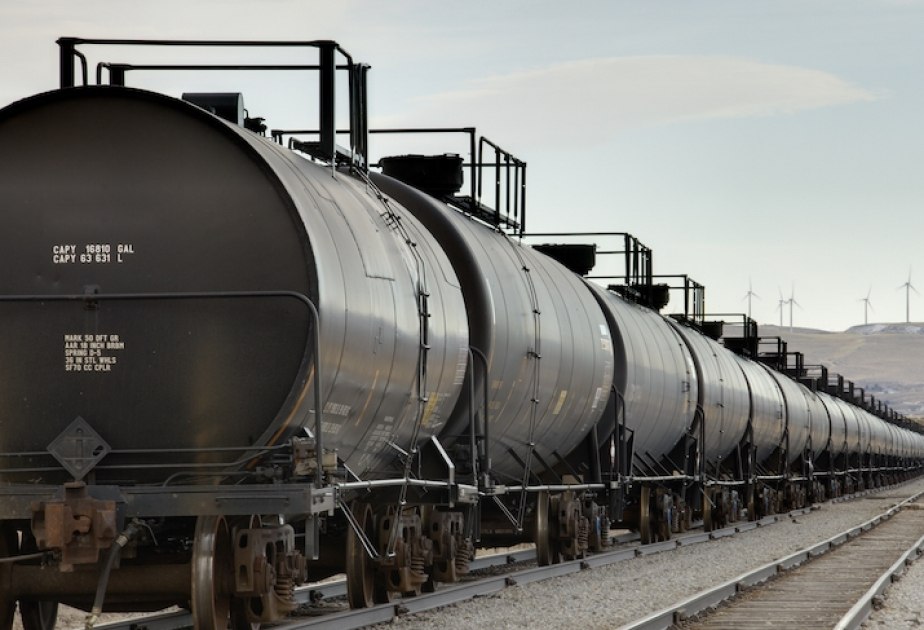
Azerbaijan has sent another large batch of diesel fuel to Armenia, with nearly 900 tons departing from Baku on April 11.


