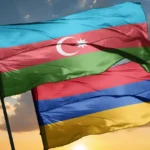
In today’s world, nothing is valued more highly than security and professionalism—especially when war is raging nearby. Against the backdrop of the current dramatic developments in Iran, Azerbaijan has once again demonstrated this reality. In theory, it is a small country with a population of 10 million. In practice, however, the picture is very different.
Today, the Astara border checkpoint on the Azerbaijan–Iran frontier is operating under a special regime. It is not only Azerbaijani citizens who are being evacuated from Iran. Russian, Italian, and many other foreign nationals are also leaving Iran via Astara. Numerous diplomatic missions are using Azerbaijani territory as the safest route out of an increasingly unstable environment.
Azerbaijan has faced similar circumstances before. The same pattern unfolded in the summer of 2025 during the so-called “12-Day War.” At that time, the film crew of Fyodor Bondarchuk departed Iran through Azerbaijan. The Russian State Symphony Orchestra followed the same route. In gratitude, the orchestra later performed a free concert at the Baku Philharmonic—a symbolic and elegant musical “thank you.”
Today, however, the scale is larger and the geography broader—all against the backdrop of closed land borders. And, if we are completely candid, the events in Iran have once again underscored the security importance of maintaining controlled borders and preventing uncontrolled mass crossings.
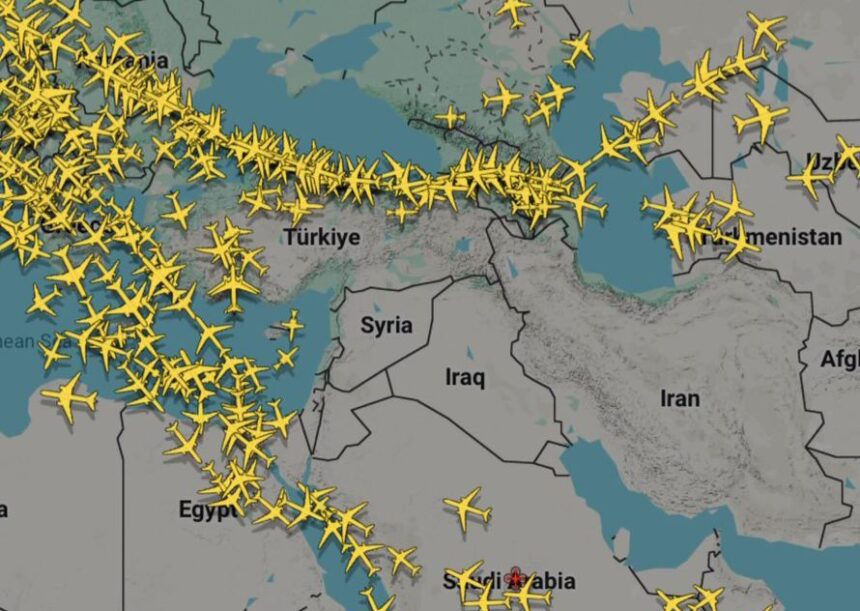
Yet perhaps the most significant developments are taking place in the skies. Military actions have led to the closure of the airspace not only over Iran but also over neighboring countries, including several Gulf states. As a result, a vast volume of transit flights has been rerouted through Azerbaijan. Moreover, aircraft from numerous airlines are requesting emergency landings in Baku.
This is not merely a matter of geography—it reflects the development of Azerbaijan’s aviation sector. The country boasts a five-star international airport capable of accommodating all types of aircraft, while also providing full technical servicing. In addition, there are professional ground services and hotel infrastructure able to host passengers who unexpectedly find themselves grounded.
That is the visible side of the story. There is also the surge in transit flights now passing through Azerbaijani airspace due to the conflict. And here again, geography alone does not explain the situation. In recent years, Azerbaijan has invested heavily in air traffic control systems—in simple terms, in the work of its air traffic controllers. It may seem that the sky has no borders and that aircraft can fly wherever they wish. In reality, every flight is carefully guided by dispatch services. In this area, Azerbaijan has much to offer: modern equipment, highly trained specialists, and a dispatch capacity capable of absorbing a massive additional transit flow. Experience shows that after such emergency reroutings, many airlines continue using the “Azerbaijani air corridor” even once the crisis subsides.
As a result, Azerbaijan today once again plays the role of a crucial transit link—both on the ground and in the air. The country is emerging as a key player in global logistics, not only in long-term strategic terms but also in times of emergency. And this is not the product of chance. It is the outcome of a deliberate, long-term strategy.
Nurani