St. Petersburg once again became a venue where the post-Soviet space attempted to present itself as cohesive. On December 22, the leaders of the CIS countries gathered for their traditional informal meeting. The Hermitage, St. George’s Hall, the historic interiors of the imperial era — everything seemed to invite conversations about eternity. Yet the question arises: were they discussing the future of the Commonwealth, or merely admiring the past?
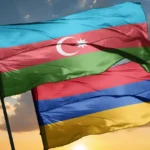
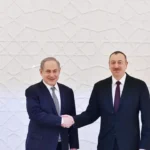
Vladimir Putin’s statement that the CIS has become an “authoritative regional integration association” sounded, to say the least, bold. Authority, as is well known, is measured not by sightseeing routes and photo sessions in aristocratic halls, but by the real demand for a format. Especially given that Azerbaijani President Ilham Aliyev did not attend the summit, citing a busy schedule.
The choice of the Hermitage and St. George’s Hall looked more like carefully selected scenery. While the leaders discussed the “unity and authority of the CIS,” they leisurely toured the Hermitage’s noble interiors. Symbols of imperial power seemed to wink: in Russia, the past is not merely alive — it continues to dictate the rules of the present. And this is against a troubling reality: violence and discrimination on ethnic grounds, a continuing rise in xenophobia, and unequal treatment of non-Russians. One wonders whether this issue was raised among the participants of the meeting. Of course, it is a rhetorical question.
As CIS countries increasingly build their own bilateral and regional alliances, a simple question arises: what real function do these summits perform, beyond maintaining a beautiful tradition? And how does the demonstrative appeal to symbols of tsarist Russia align with the declared principle of equal partnership?
Political analyst Rashad Rzakuliev addresses these questions for Minval Politika.
Asked by what concrete and measurable criteria the authority of the CIS can be assessed and how it manifests itself in practice today, the analyst said it is difficult for him to comment on President Vladimir Putin’s conclusions about the “authority” of the Commonwealth in the global or even regional context of geopolitics and geo-economics. In his view, the CIS today is an organization that essentially holds annual commemorative events mourning the former authority and grandeur of the Soviet Union and the Russian Empire.
“If we consider that the 11 CIS countries have a combined GDP of about 2.5 trillion dollars — comparable to the economies of countries such as Brazil or Canada — this clearly does not correlate with Russia’s declared claims about further ‘bright prospects’ and the attractiveness of this project,” the expert noted.
He added that the CIS is “slowly but surely dying,” and today this is clear to everyone.
“And while the leadership of the Russian Federation is doing everything possible to artificially sustain the barely smoldering life of this organism, the informational occasions generated by this structure will for some time continue to occupy space on the agendas of former Soviet states. But the coming to power of a new generation of political leaders in Russia will put an end to the phantom pains of those who view the collapse of the USSR as the ‘greatest geopolitical catastrophe’ of the 20th century. For now, however, the CIS — like the embalmed body of Vladimir Lenin — remains a sacred accessory of the aging Soviet-Russian establishment,” he emphasized.
When asked about the real and practical value of CIS summits, given the active development of bilateral and alternative regional formats of cooperation, the analyst replied that this is, rather, a rhetorical question.
“The most important task of participation in summits for Russia’s neighbors today is to preserve the possibility of calm dialogue with the Kremlin. It is a tribute of demonstrative respect to the former metropolis, which, against the backdrop of aggression against Ukraine, is becoming increasingly militarized, posing a threat of destabilization and chaos to all countries along its borders. Each CIS country understands perfectly well that on the eve of a new Eurasian redistribution, it is necessary to neutralize all possible threats and risks. And the standoff in which the leading global geopolitical centers are currently locked brings little positive to small states in terms of security and prospects,” he explained.
Regarding the symbolic part of the summit — the tours of the Hermitage and the choice of St. George’s Hall — the analyst noted that, in his view, the question of attempting to transmit a particular historical and political narrative is fully justified.
“A dispute with the past, an attempt to rewrite one’s own history, may well lead Russia to the loss of its future,” he stressed.
Finally, the expert commented on whether the summit program corresponds to the principle of equal partnership.
“This is, unfortunately, also a rhetorical question. The principle of equal partnership is possible and practiced, for example, in the British Commonwealth. But it is a priori impossible in the CIS. And I know only one country that is not afraid to speak its word within this organization. And I am proud to be its citizen,” the political analyst concluded.