Energy corridors crossing the South Caucasus, particularly those linking Azerbaijan and Türkiye, are gaining increasing strategic importance as global energy markets shift and countries seek alternatives to traditional supply routes.
The region has become a critical bridge connecting Central Asia and the Caspian basin with European markets, especially after the Russia-Ukraine war accelerated efforts to reduce reliance on Russian energy supplies.
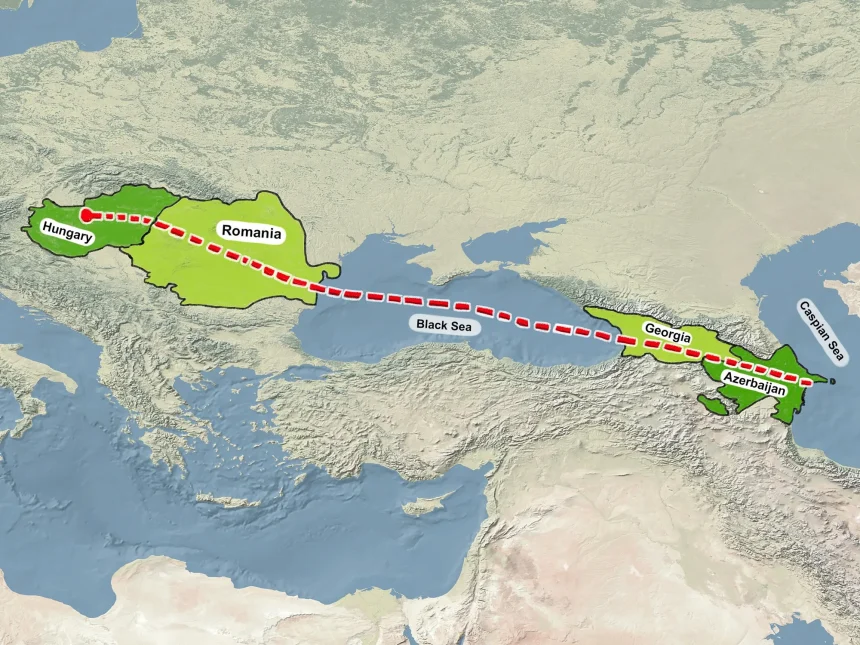
Key infrastructure projects such as the Baku–Tbilisi–Ceyhan (BTC) oil pipeline and the Southern Gas Corridor, which transports Azerbaijani gas from the Shah Deniz field through Türkiye to Europe, have strengthened the role of the South Caucasus as a major energy transit hub.
Analysts say these routes provide Europe with alternative supplies while enhancing the geopolitical importance of both Azerbaijan and Türkiye as energy and logistics gateways between Asia and Europe.
The corridors are increasingly viewed as strategic alternatives to other vulnerable maritime routes, particularly amid ongoing tensions affecting global energy transport.
Recent initiatives aimed at expanding regional connectivity—including proposed transport and energy corridors linking Central Asia, the Caucasus and Europe—also reflect growing competition among major powers over trade routes and energy infrastructure.
Türkiye is expected to benefit significantly from the expanding network of transit routes, reinforcing its ambition to become a key hub for the movement of oil, gas and goods between East and West.
However, analysts note that security and geopolitical tensions in the region, including disputes involving neighboring countries, remain potential risks for infrastructure and transit stability.
Despite these challenges, the South Caucasus is increasingly positioned as a strategic corridor for global energy flows and trade, highlighting the region’s growing influence in the evolving geopolitical and economic landscape linking Asia and Europe.