
Now Reading: Deepening Azerbaijani-Israeli cooperation contributes to South Caucasus stability
-
01
Deepening Azerbaijani-Israeli cooperation contributes to South Caucasus stability

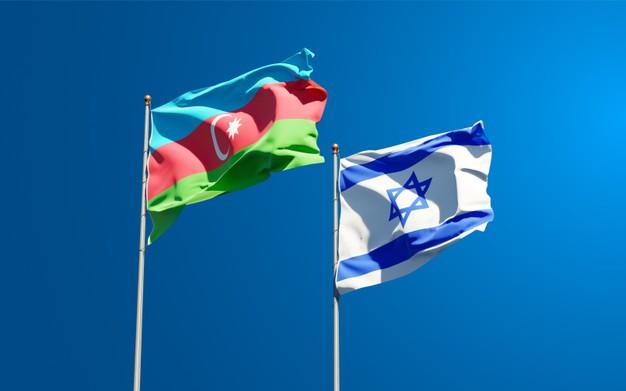
Israel’s deepening relations with Azerbaijan and the Central Asian countries—and the significant assistance that it can provide to these countries’ domestic economies as well as their security—contributes to the stability and security of the broader region in the face of Iranian bellicosity. They also give the Central Asian countries another “vector” for escaping the visegrip of Russian and Chinese influence.
BACKGROUND: Bilateral relations between Azerbaijan and Israel are firmly undergirded by a shared commitment to common humanistic values in the face of complex challenges, as is evident in the culture and history of both societies. The respective security concerns of the two modern states are unified by Iran’s hostility against those humanistic principles, as is daily on display in the Tehran regime’s repression of the continual and still ongoing popular uprising in the country, and particularly its oppression all non-Persian peoples (and not just the Azerbaijanis in the country’s northwest). This regime’s institutionalized antisemitism, driving incendiary declarations that Israel must be eradicated from the map, is strikingly matched by its disdain—verging on contempt—for Azerbaijan, where the secular state of the predominantly Shi’ite Muslim population compellingly contradicts Iran’s theocratic pretensions.
Ties between the two countries have evolved significantly over the past few decades since Azerbaijan’s independence. Their cooperation has deepened in a geopolitical context where they share common strategic interests: these include, but are not limited to, countering Iran’s new and increasingly pervasive influence in the region, working to ensure regional stability, and promoting economic prosperity as a precondition for international security. Key aspects of their joint efforts include increasingly robust defense and security cooperation, dynamic industrial and agricultural cooperation, and developing an efficient intelligence-sharing mechanism. The challenge posed by Iran’s increased hostility against Azerbaijan since the end of the Second Karabakh War has increased the necessity—indeed the urgency—of enhanced security cooperation with Israel. The two countries are responding together to threats directed against them from the same source.
According to the Stockholm International Peace Research Institute, Israel supplied 60 percent of Azerbaijan’s imports of defense systems from 2015 to 2019. In late 2020, during the Second Karabakh War (often called the “Forty-four Day War” in Azerbaijan by analogy to Israel’s “Six Day War” in 1967) Azerbaijan demonstrated an innovative use of Israeli arms and was able to integrate and deploy the capabilities of Turkish and Israeli unmanned aerial vehicles together. Press reports have suggested that Azerbaijan may have bought Iron Dome missile defense batteries in May 2021 as Iran’s unprecedented military activities on its border exacerbated the tension between the two countries, and that it was considering purchasing Israel’s Arrow-3 missile defense system later that year.
IMPLICATIONS: Israeli foreign minister Eli Cohen’s April 2023 visit to Baku is in the line of a series of interministerial meetings that have further deepened relations between the two countries since the end of the Second Karabakh War in November 2020. It follows the October 2022 visit to Azerbaijan by Israeli defense minister Benny Gantz. Gantz’s visit, in turn, followed by several months the April 2022 visit by Israel’s finance minister Avigdor Lieberman to Azerbaijan, where agreements were reached to expand economic relations, particularly Israeli imports of Azerbaijani oil. Israel reciprocated by pledging to share expertise and technical knowhow with Azerbaijan in agricultural production, and in particular cultivation of wheat, which has been a global shortage due to Russia’s war of aggression against Ukraine. The unannounced visit of Gantz in October 2022, which became public knowledge only after its completion, includedthe signature of several crucial cooperation agreements in the military and security sectors with high-ranking Azerbaijani officials.
These meetings and agreements are only the latest response by Israel in aid of Azerbaijan’s combat against Iran’s long history of illegal conduct in the region. This conduct includes, notably, persistent smuggling operations and extensive drug-running activities in Azerbaijan’s Karabakh region during its three-decade occupation by military forces of the Republic of Armenia. That conduct seriously undermined the integrity of the rule of law in the region, and it also provided Iranian officials with a substantial and highly lucrative source of revenue. This income, in turn, was instrumental in financing its regional ambitions and in offering financial support to a variety of extremist groups. The Iranian clerical regime, despite lip-service to Muslim solidarity, aims its state-directed terrorism against Muslim Azerbaijan and in support of Christian Armenia. Its foreign policy is conducted from a purely hegemonic perspective that exceeds even the wildest dreams of the Safavid dynasty.
Iran makes regular and constant provocations against Azerbaijan’s state integrity. A terrorist attack directed against the Azerbaijani embassy in Teheran in January was by all indications sponsored by police and intelligence services of the Iranian state. An attempt on the life, in Baku, of a member of Azerbaijan’s parliament who is well known for his outspoken criticism of Iran, was thwarted only by fortunate circumstances. Against this backdrop, Azerbaijani media announced in April the arrest, in Baku, of 20 people allegedly affiliated with Iran’s intelligence ministry on charges of promoting “the Islamic Republic’s propaganda, spreading religious superstitions, attempting to overthrow the secular government of Baku, and engaging in drug trafficking” under the guise of religious activities.
CONCLUSIONS: Following from all these recent provocations, which are more serious and frequent than in the history of independent Azerbaijan’s state-to-state relations with Iran, President Aliyev in early May gravely observed that “relations between Azerbaijan and Iran are at the lowest level ever.” Iran’s challenges to regional peace and stability go beyond these state-terrorist acts. They include Teheran’s military-industrial cooperation with Yerevan, its support for extremist groups, and its unprecedented military operations on the border with Azerbaijan representing an enhanced threat. These actions do not just undermine prospects for peace and stability in the region. They necessitate a robust response from Azerbaijan and its allies.
Israel’s closer relations with Azerbaijan must be contextualized in the new geopolitical landscape established by the Abraham Accords. Such developments have likewise conditioned the significant improvement of Israel’s relations with Turkey and other countries in the region. They have already led to closer relations with a series of the countries in Central Asia as well. For example, foreign minister Cohen’s meetings in Baku took place just before he flew to Turkmenistan to inaugurate his country’s first embassy in Ashgabat, which happens to be 12 miles from the border with Iran.
Russia’s relative strategic weakness in the South Caucasus since the end of the Second Karabakh War, and particularly in the aftermath of re-igniting its war of aggression against Ukraine, poses profound challenges to the enduring peace and stability in the region. That is because it creates the opening for Iran’s growing infiltration into the region through the complex structures of its ally Armenia. The visit of Israel’s foreign minister to Azerbaijan—coming at a time when the region faces mounting challenges from Iran’s escalating threats against Azerbaijan and its military-industrial cooperation with Armenia—is thus a factor for stability in the region. The strengthening of Israel-Azerbaijan relations is a counterweight to Iran’s malign influence and, as such, a partnership for regional security.
Robert M. Cutler is Senior Research Fellow, NATO Association of Canada, and Director of its Energy Security Program.

Related Posts


Previous Post
Next Post

- Aliyev says Turkic world is emerging as a major center of influence

- Baku hosts Turkic World Week honouring landmark 1926 Turkological Congress

- EU envoy holds talks in Baku ahead of high-level engagement with South Caucasus

- Europe must not lose Azerbaijan: Oleksiy Goncharenko on the risks of confrontation between Baku and the Council of Europe

- A leader forged by patience and victory
