
Now Reading: Regional integration is imperative for peace and security in the South Caucasus
-
01
Regional integration is imperative for peace and security in the South Caucasus

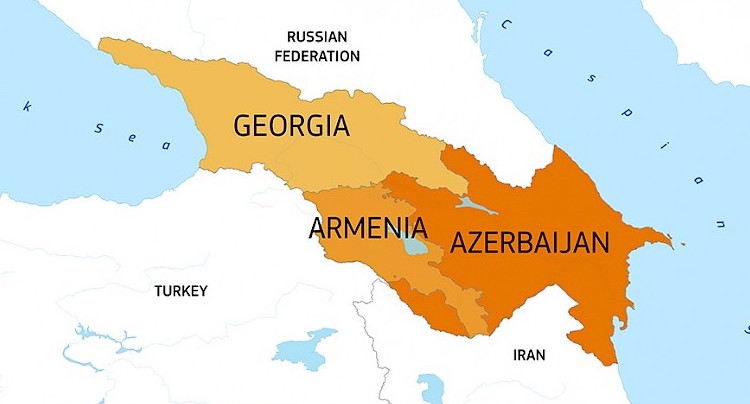
The mutual recognition each other’s territorial integrity by the two countries, and in particular, Armenia’s recognition of Garabagh as part of Azerbaijan, has laid a strong foundation for a more stable and peaceful future between the two nations. The statement by the Armenian parliamentary speaker Alen Simonyan on November 28 concerning Armenia’s recognition of Azerbaijan’s territorial integrity including the Garabagh region and his emphasis that “The Garabagh issue no longer exists for Yerevan” promise more constructive developments in the future, writes Vasif Huseynov.
These positive dynamics between the two countries create a good basis also for the integration amongst the three countries of the South Caucasus. Several initiatives towards this purpose have been introduced by different actors since the end of the Second Garabagh War (27 September – 10 November 2020). These initiatives can be categorized in two groups.
First, it has been proposed to create cooperation platforms in the region together with the surrounding or other external powers. In December 2020, Presidents of Azerbaijan and Turkiye jointly proposed the 3+3 (Armenia, Azerbaijan, Georgia “plus” Russia, Turkiye, and Iran) format. Although the works in this direction delayed after the first deputy ministerial meeting in December 2021, the participating countries (except Georgia) reactivated this grouping in October 2023, after the collapse of the separatist regime in Garabagh. This format is in line with the “regional solutions to regional problems” approach that is prioritized by Azerbaijan in the context of the regional geopolitics.
Another initiative with the participation of external powers was introduced by the Georgian government in September 2021. Hesitating to join the 3+3 framework due to Georgia’s conflict with Russia, Prime Minister Irakli Garibashvili put forward a peace proposal, named the Peaceful Neighborhood Initiative, “to promote peace and stability in the South Caucasus”. His proposal was formed on the 3+2 (Armenia, Azerbaijan, Georgia “plus” the EU and the USA) format which, according to Garibashvili, would “facilitate dialogue and confidence-building, and lead to the implementation of practical solutions to regional issues of common interest with our US and EU partners”. However, this initiative did not yield the same level of success as the 3+3 format.
The second group of regional integration initiatives focuses on creating a trilateral format of the three countries of the South Caucasus. This is of extreme importance for the peace and security of the region, as well as its economy, connectivity, and prosperity. Historically, various external powers pursued “divide and rule” strategy vis-à-vis the countries of the South Caucasus and manipulated the regional conflicts for their own interests. On the one hand, this intervention created new tensions and animosity amongst the local nations, on the other hand it undermined the efforts of these peoples to resolve their disputes. Against this backdrop, the leaders of these countries never met trilaterally in the entire post-Soviet period, although they came together in other multilateral platforms.
Despite various initiatives from Azerbaijan and Georgia to convene a meeting among the leaders of the three countries following the Second Garabagh War, the Armenian leadership exhibited consistent and, for unclear reasons, cautious behavior toward this trilateral format initiative. Against this backdrop, the Munich Security Conference in February 2023 presented a favorable opportunity for the leaders of Armenia, Azerbaijan, and Georgia to come together on a panel addressing the South Caucasus. However, the Armenian prime minister opted not to participate alongside his counterparts from Azerbaijan and Georgia. A notable exception to this trend took place in July of the previous year when the Armenian foreign minister visited Tbilisi to engage in a bilateral format meeting with his Azerbaijani counterpart for the first time.
However, subsequent to this visit, there were no leaders’ summits or significant peace talks in Georgia, nor were there any trilateral initiatives until October 2023. This timing coincided with the dissolution of the separatist regime in Azerbaijan’s Garabagh region. The successful outcome of Azerbaijan’s efforts against the separatists and the restoration of the country’s territorial integrity played a positive role in advancing this diplomatic process. President Ilham Aliyev of Azerbaijan, a foremost champion and proponent of regional integration, emphatically highlighted this stance in his address to the nation following his country’s military triumph over separatists in the Garabagh region on September 20, 2023:
“We propose that the future of South Caucasus countries should be based on peace, tranquility and development. …[T]he day is not far when Azerbaijan and Armenia will settle the issues between them, sign a peace treaty, and countries of the South Caucasus start working on future cooperation in a trilateral format.”
This approach is supported by the Georgian Prime Minister Garibashvili who, in his press conference with President Aliyev following the latter’s visit to Tbilisi on October 8, stated that “Our future should be peaceful and stable, and all three countries of the South Caucasus should address regional issues themselves.” President Aliyev expressed his endorsement of this approach, affirming that his country views Georgia also as a more suitable venue for the Armenia-Azerbaijan peace talks. “Several countries and also some international organizations are trying to support the normalization process between Armenia and Azerbaijan today. We welcome that. If it is not lop-sided and biased, of course, we welcome any mediation and assistance. However, in my opinion, taking into account both the historical relations and the geographical factor, the most correct option in this field would certainly be Georgia,” he said.
In its aftermath, the first ever meeting amongst the prime ministers of Georgia, Armenia, and Azerbaijan took place on October 26, on the sidelines of the Silk Road Forum in Tbilisi. This was a historic event that raised hopes in the region. The three prime ministers gave positive messages about the future of the region and outlined their proposals towards this goal. The three countries need to seize this momentum, convene more high-level meetings, and implement tangible steps towards fostering integration in the South Caucasus.
Undoubtedly, these undertaking encounters diverse challenges, occurring at both the 3+3 and trilateral (Armenia-Azerbaijan-Georgia) levels. However, for the sake of peace and security in the South Caucasus, these initiatives hold paramount significance. It is imperative for the regional countries to prevent the power vacuum resulting from waning Russian influence from turning the South Caucasus into a battleground for great-power rivalry. Regional integration stands out as a viable solution in this context.
Dr. Vasif Huseynov is the head of the Western Studies department at the Center of Analysis of International Relations (AIR Center) and adjunct lecturer at ADA and Khazar Universities in Baku, Azerbaijan.

Related Posts


Previous Post
Next Post

- Aliyev says Turkic world is emerging as a major center of influence

- Baku hosts Turkic World Week honouring landmark 1926 Turkological Congress

- EU envoy holds talks in Baku ahead of high-level engagement with South Caucasus

- Europe must not lose Azerbaijan: Oleksiy Goncharenko on the risks of confrontation between Baku and the Council of Europe

- A leader forged by patience and victory
