
“The idea that the ‘one nation, two states’ rhetoric used by Turkey and Azerbaijan should be revised as ‘one nation, six states’ has been defended in the region (among Turkic states),” Tomar said, adding that it was a critical development.

“The idea that the ‘one nation, two states’ rhetoric used by Turkey and Azerbaijan should be revised as ‘one nation, six states’ has been defended in the region (among Turkic states),” Tomar said, adding that it was a critical development.
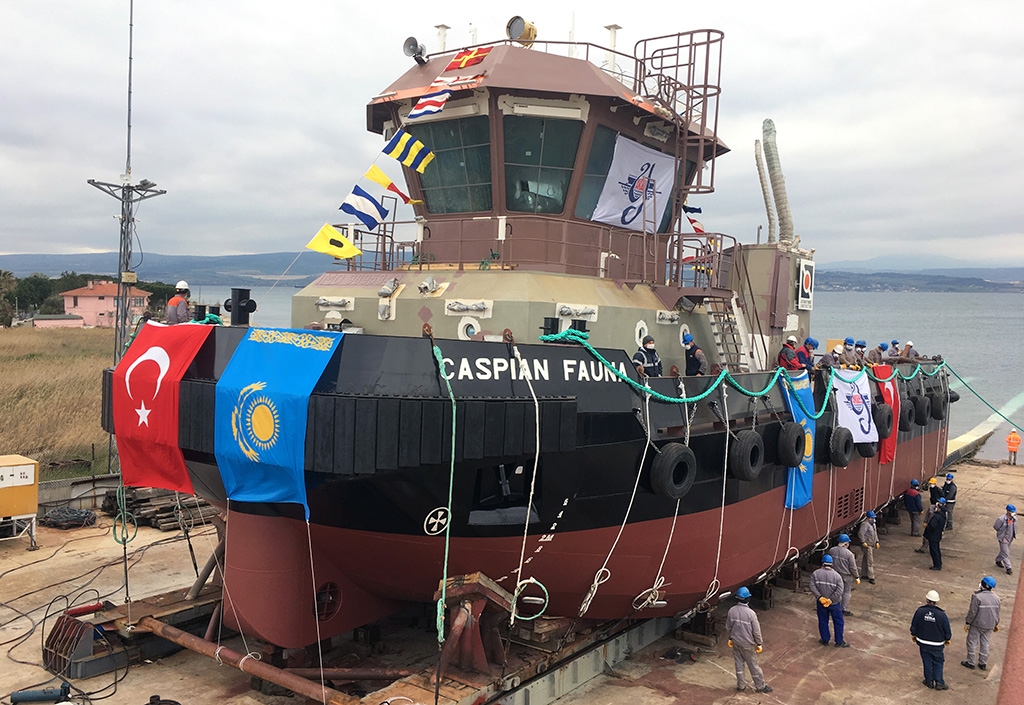
Since shepherding Azerbaijan’s military victory last fall, Turkey has been on a Silk Road charm offensive. The challenge is turning talk into action.

When a country whose military infrastructure is being destroyed in real time—and whose supreme leader was killed on the very first day of the conflict by an airstrike—starts issuing ultimatums to a sovereign neighbour, it is a clinical picture of a regime in agony, disconnected from reality.

The attack by Iranian drones on the territory of Nakhchivan was, strictly speaking, not entirely unexpected given the strikes Iran had already carried out against the territories of states that were not involved in the escalation of the conflict in the Middle East.

President Ilham Aliyev demonstrates remarkable skill in articulating the multifaceted nature of Azerbaijan’s foreign policy.

On January 5, President of the Republic of Azerbaijan Ilham Aliyev was interviewed by local TV channels.

President Ilham Aliyev sincerely congratulated all Azerbaijanis living around the world on the occasion of the Day of Solidarity of World Azerbaijanis.

Azerbaijan, a leader member of the Non-Aligned Movement (NAM) and Organisation of Turkic States (OTC), is a relatively new addition to the small number of secular Islamic states in the world alongside Türkiye, Indonesia and Pakistan.

A rather strange appeal was recently published from by former US State Department Josh Paul and the Armenian National Committee of America signed by a long list of Palestinian and other organisations. The appeal did not praise peace coming to the Middle East, which has seen eight decades of conflict, but rather aggressively attacked Azerbaijan as unfit to be part of the planned 20,000-strong International Stabilization Force (ISF).

The Organization of Turkic States (OTS), long perceived as a regional “cultural club,” positioned itself in 2025 as an effective geopolitical instrument aimed at strengthening the strategic agency of Turkic-speaking nations in Central Asia and the South Caucasus—an evolution with clear implications for reducing Russia’s influence.

Turkmenistan, with the fifth-largest natural gas reserves in the world, will be able to expand natural gas shipments to Europe and Türkiye, reducing its reliance on sales to China.

At a meeting in Tashkent, Uzbekistan, last Sunday, the leaders of the five Central Asian states — Kazakhstan, Uzbekistan, Turkmenistan, Kyrgyzstan and Tajikistan — made an important decision that could have geopolitical ramifications for Eurasia.
Central Asia is emerging as a new hub of diplomacy and regional cooperation with growing global influence.

Central Asian leaders met in Tashkent on November 15–16 for the seventh Consultative Meeting of Heads of State. Azerbaijan attended as a guest with full rights, as it had done at the meetings last year and the year before.

Azerbaijani President Ilham Aliyev’s state visit to Kazakhstan this week highlights the deepening strategic alignment between the two Caspian neighbors.

History was made at the White House on August 8, 2025, when President Donald Trump hosted Armenian Prime Minister Nikol Pashinyan and Azerbaijani President Ilham Aliyev for a landmark meeting.
In today’s world, marked by increasing geopolitical tensions, Azerbaijan is seen in the international arena as a successful and, most importantly, stable state, confidently pursuing an independent foreign policy grounded in its national interests.

Over past 34 years, Azerbaijan has advanced its economy, strengthened army, while elevating relations with Türkiye to strategic cooperation level.
Over past decades brotherly nations Azerbaijan and Kazakhstan built relations of genuine strategic and allied partnership – President Ilham Aliyev.

Hungarian Prime Minister Viktor Orbán will take part in the 12th Summit of the Organization of Turkic States, which will be held in Azerbaijan on October 6–7.

Azerbaijani President Ilham Aliyev has hailed the Zangezur Corridor as a key transport route that will link continents and enhance regional cooperation.

Aliyev noted that almost five years ago, during the 44-day Patriotic War, Azerbaijan restored justice, international law, and its own dignity by regaining its lands.

For decades, establishing lasting peace in the South Caucasus has been one of the most persistent challenges for regional states and international actors alike.

On July 19, a meeting was held in Khankendi between President of the Republic of Azerbaijan Ilham Aliyev and participants of the 3rd Shusha Global Media Forum, held under the theme “Digital Pathways: Strengthening Information and Media Resilience in the Age of AI.”