
Now Reading: The perils of relying on Russian transit for Azerbaijani gas
-
01
The perils of relying on Russian transit for Azerbaijani gas
The perils of relying on Russian transit for Azerbaijani gas

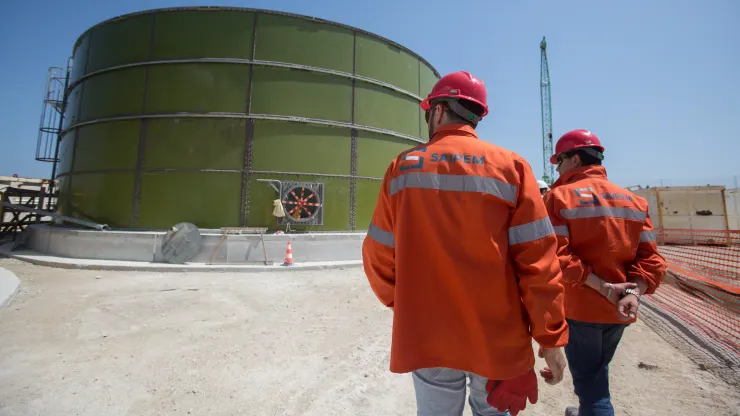
One proposal gaining traction is the transit of Azerbaijani gas through Russia to Ukraine and subsequently to the EU. Azerbaijani officials have confirmed that they have been approached by the EU and Ukraine to facilitate this transit.
While this might seem like a viable short-term solution, it raises significant strategic and security concerns.
Firstly, it’s important to recognize that Russia is unlikely to facilitate the transit of gas from an alternative supplier through its territory without deriving significant benefits, nor if the transit undermined its own interests.
In 2023, Russia transited approximately 12 billion cubic meters (bcm) of natural gas via Ukraine to Eastern Europe, generating about $5 billion for its coffers. It is improbable that Russia will allow such a lucrative market to be ceded to a competitor. This skepticism is grounded in Russia’s past behavior, where it has used energy supply as a geopolitical tool.
Secondly, it is doubtful that Azerbaijan can currently offer significant additional volumes of gas to fully substitute the existing Russian transit via Ukraine.
This implies that the only way to replace the existing volumes of Russian gas would be through various swap deals between Azerbaijani and Russian gas companies. Technically, this would mean re-labeling Russian gas as Azerbaijani, but in reality, the Russian gas would continue flowing to the EU.
Such an arrangement would not reduce the EU’s reliance on Russian gas but would be a creative way to circumvent sanctions and restrictions, akin to blending different oil grades and utilizing a shadow fleet for oil transport.
Thirdly, allowing Russia to facilitate the transit of Azerbaijani gas could enable Russia to exercise control over yet another critical supply route.
This could lead to a scenario where Russia can halt gas supplies at will, leveraging its position to exert political and economic pressure on European nations. Recent examples of such aggressive actions include the significant reduction of supplies via the Nord Stream 1 pipeline in summer 2022 and the unilateral sanctioning of the Europe-Yamal pipeline via Poland in May 2022.
For the European Union, true diversification of gas supply and a substantial reduction in dependence on Russian gas necessitates more robust measures. Two critical projects stand out in this context:
Expansion of the South Caucasus Pipeline and TANAP:
The South Caucasus natural gas pipeline, coupled with the Trans Anatolian Natural Gas Pipeline (TANAP), offers a strategic route to bring more non-Russian gas from the Caspian region to Turkey and further into Eastern Europe via the idle Trans-Balkan pipeline and Vertical Corridor.
TANAP has the potential to increase its capacity from the current 16.2 bcm to 31 bcm annually. This expansion requires only the construction of four additional compressor stations, without the need for new pipelines.
However, the TANAP consortium has not yet made a Final Investment Decision on this expansion due to the lack of long-term contracts from EU gas buyers. The Director-General of the TANAP consortium, Saltuk Duzyol, recently stated that the decision to increase the capacity of the gas pipeline could be made if there is appropriate interest among European consumers and agreements with the pipeline owners and gas producers.
“However, Europe is not sending clear signals, in particular regarding gas demand. Long-term gas purchase agreements must be signed between Azerbaijan and European buyers, and transit agreements will need to be concluded to supply additional volumes via TANAP,” Duzyol added.
This project, if fully realized, could significantly enhance energy security and supply diversification for Eastern Europe.
The Trans-Caspian Gas Pipeline (TCGP):
This proposed subsea pipeline between Turkmenistan and Azerbaijan via the Caspian Sea would also include a connection to the Tengiz Field in Kazakhstan. The TCGP project would transport natural gas from Turkmenistan and Kazakhstan to EU member countries via TANAP, bypassing Russian territory entirely and reducing the geopolitical risks associated with relying on Russian-controlled transit routes. Developing this route would bring real diversification of gas supply to Europe.
Moreover, the proposal to transit Azerbaijani gas through Russia and Ukraine to Eastern Europe poses substantial risks to real diversification efforts. Such transit could decrease interest from shippers in long-term commitments to the TANAP pipeline, obstructing its expansion to 31 bcm—a crucial element in Eastern Europe’s energy strategy.
In conclusion, while the idea of transiting Azerbaijani gas through Russia and Ukraine might appear to be a convenient solution, it is fraught with risks that could compromise Eastern Europe’s energy security and diversification goals.
A more strategic approach would involve bolstering projects like TANAP and exploring new routes for Caspian gas, ensuring a more stable and reliable energy future for the region.
The reliability of transiting gas through Russia is questionable, as evidenced by Russia’s abrupt halting of the Yamal and Nord Stream 1 pipelines in the past. Such actions highlight the unpredictability and potential for supply disruptions inherent in this plan.
Sergiy Makogon is Senior Energy Expert, former CEO of Gas TSO of Ukraine (2019-2022).

Related Posts


Previous Post
Next Post


- Aliyev says Turkic world is emerging as a major center of influence

- Baku hosts Turkic World Week honouring landmark 1926 Turkological Congress

- EU envoy holds talks in Baku ahead of high-level engagement with South Caucasus

- Europe must not lose Azerbaijan: Oleksiy Goncharenko on the risks of confrontation between Baku and the Council of Europe

- A leader forged by patience and victory
