
Now Reading: Prospects of Armenia-Turkey normalization appear closer than ever
-
01
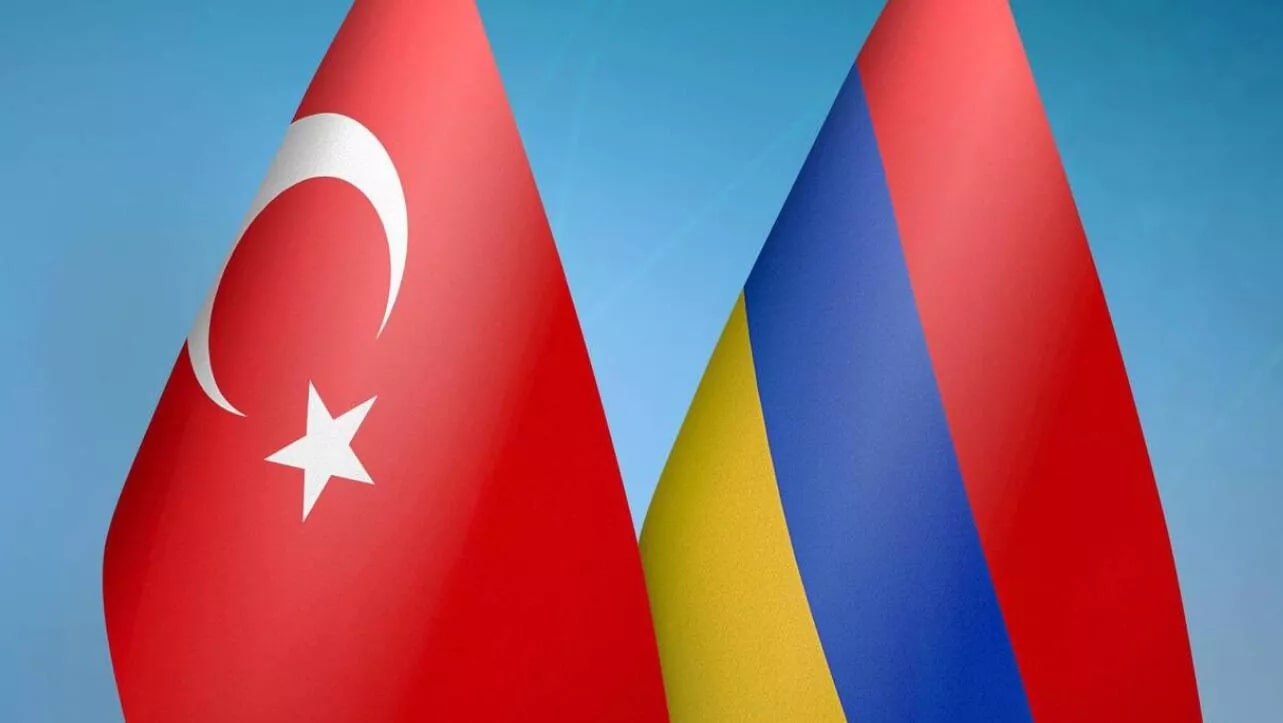
Prospects of Armenia-Turkey normalization appear closer than ever


“We will evaluate those signals, we will respond to the positive signals with a positive signal,” he said at a government sitting on August 27. Turkish President Recep Tayyip Erdogan told reporters two days later: “We can work to gradually normalize our relations with an Armenian government that has declared its readiness to move in this direction.”
But there also were positive signals more than a decade ago, in the diplomatic 2009 effort to restore relations that became known as the “protocols.” Those ultimately foundered, however, as Azerbaijan pressed its ally Turkey to break them off.
Following last year’s war between Armenia and a Turkey-backed Azerbaijan, though, the calculations of all three sides have changed. And analysts and officials from around the region say that this time, the possibility of restoring relations is closer than ever. Questions nevertheless remain about a potential spoiler role that Russia may play.
Turkey formally recognized Armenia’s independence in 1991, immediately following the collapse of the Soviet Union. But Ankara unilaterally closed the countries’ border two years later, during the war between Armenia and Azerbaijan, in response to Armenia’s occupation of Azerbaijani territories surrounding the former Soviet Nagorno-Karabakh Autonomous Oblast.
Since then, Armenia’s eastern and western borders – with Azerbaijan and Turkey, respectively – have remained closed, leaving Armenia with only two outlets to the rest of the world: Georgia and Iran.
Last year’s 44-day war, which ended in Armenia’s defeat, has changed the game. As a result of the ceasefire agreement, Armenia handed back the occupied territories to Azerbaijan, meaning that Ankara’s original justification for breaking ties is no longer relevant.
“Azerbaijan opposed the normalization between Armenia and Turkey in 2009 on the argument that Turkey had closed the borders after the occupation of Kelbajar in 1993,” Ankara-based political analyst Hasan Selim Özertem told Eurasianet, referring to the first of the Azerbaijani territories to be occupied. “Before Armenia’s withdrawal from this region, Baku saw Turkey’s opening of the borders as a betrayal and harshly criticized it. Now, after the truce, this issue is off the table and it won’t be a surprise to see a milder tone from Azerbaijan than in 2009.”
Erdogan’s statements about the potential for restoring relations have not mentioned Azerbaijan or Karabakh, and Azerbaijan has been conspicuously silent while Armenia and Turkey exchange positive public signals.
The Turkish leader did specify the need for both sides to “respect each other’s territorial integrity.” That kind of language is provocative for some Armenians, particularly in the diaspora, who demand that Turkey hand over land in eastern Turkey – which they call “Western Armenia” – from which ethnic Armenians were expelled during the 1915 genocide.
But those demands are rarely expressed on the official level, and the 2009 protocols also included language about respecting territorial integrity. And while many Armenians fear that a deal between Ankara and Yerevan would require the latter to give up its efforts to gain international recognition of the genocide, the earlier protocols also were silent on that issue.
“The main difference is that now, Azerbaijan won’t stand in the way of a reconciliation process between Turkey and Armenia,” said Ragip Soylu, the Turkey bureau chief for the news website Middle East Eye. “The Karabakh issue is almost settled and Turkey did more than expected in Baku’s favor. There is a new level of cooperation and alliance between Turkey and Azerbaijan that has established deep trust and understanding. So Turkey could open its borders, if Armenia doesn’t keep bringing up this idea of Greater Armenia.”
Turkish aid to Azerbaijan in last year’s war was substantial: military advisers, equipment, and even Syrian mercenaries to fight on the Azerbaijani side. Azerbaijan had hoped to get Turkey more involved in the diplomatic process, including pushing for Turkey to get a chairmanship in the Minsk Group (alongside France, Russia, and the United States), the body that has been mediating peace talks for decades.
In the end, however, Turkey was entirely shut out of the post-war agreement, and it was Russia whose position in the region was strengthened. Turkey ended up only with a small deployment of surveillance drone operators in Azerbaijan.
Armenian officials say they believe Baku remains in debt to Ankara and so is unlikely to block something that Turkey wants to do.
“Turkey paid its dues to Azerbaijan,” one high-ranking Armenian government official told Eurasianet, speaking on condition of anonymity. “Azerbaijan could block the talks again and Armenia is ready for that scenario. But Azerbaijan shouldn’t underestimate Turkey’s long-term influence there,” including pro-Turkey political elements and Azerbaijan’s new reliance on Turkish weaponry.
Azerbaijan has been pressing Armenia to sign a final resolution of the conflict that would include the latter’s recognition of Nagorno-Karabakh as Azerbaijani territory. But Baku has been silent as Erdogan and Pashinyan exchange positive signals, and Azerbaijan is unlikely to try to insert its agenda into the process, said Fariz Ismailzade, the vice rector of ADA University in Baku.
“I don’t think that a bilateral Armenia-Turkey agreement will necessarily be linked to the Karabakh issue,” Ismailzade told Eurasianet. “But in general the expectation will be that if Turkey-Armenia relations normalize, there will be more chances for peace in Karabakh, too.”
The Russia factor
While everyone seems in favor of normalization this time, there are differences in how the various sides expect it to be worked out.
Most Armenian analysts and officials believe that Yerevan should pursue normalization with Ankara one on one, without Russia, Azerbaijan, or anyone else getting involved. Turkey, meanwhile, appears to be more interested in pursuing normalization in the framework of its proposed “3+3” platform, a regional body made up of the South Caucasus states and their neighbors: Armenia, Azerbaijan and Georgia, plus Iran, Russia, and Turkey.
“Turkey is planning to include everyone in the region for this normalization between Ankara and Yerevan. So Azerbaijan also would be part of this process,” Soylu said. “Turkey also hopes that Russia will be willing to be part of this platform that would normalize ties with Armenia, but it’s hard to see whether Russia will be a willing partner.”
Russian officials have recently spoken positively about the new rhetoric between Armenia and Turkey and have expressed their willingness to assist. “Now, when the war in Nagorno-Karabakh is over, there are grounds for unblocking the political process, transport and economic ties,” Foreign Minister Sergey Lavrov said on September 3. “It would be logical if Armenia and Turkey resumed efforts to normalize relations.”
Some officials in Yerevan think that Russian involvement may help given that the domestic opposition, which is generally pro-Russia, has been campaigning against the idea of normalization. Hayk Mamijanyan, the deputy chair of the parliament’s foreign relations committee, said he suspects that Turkey will in fact put forward preconditions for normalization that haven’t been reflected in Erdogan’s recent statements and that the government is hiding that from the Armenian public. “Now either dispel those doubts, or it means you have decided something behind the people’s backs,” he told RFE/RL on September 3.
Russian involvement in brokering a deal between Ankara and Yerevan, according to this thinking, would blunt that opposition.
Others in the government, though, think that Russia is more likely to play a spoiler role, given the volatile nature of relations between Ankara and Moscow. “Armenia is trying to keep Russia at arm’s length when it comes to normalization with Turkey,” the government source said. While relations between the two countries are good at the moment, “Armenia understands that it has to rush before Turkey shoots down another Russian plane and that window is gone. In other words, do it before Russia objects.”
Some Armenian analysts hope there may be an incentive for Ankara to keep Moscow out of the process, as well. The recent statements from Moscow suggest that Russia is not involved, but only trying to belatedly catch up, said Richard Giragosian, the head of the Yerevan think tank Regional Studies Center.
Giragosian said that Turkey feels sidelined by Russia in the post-war Caucasus; left out of the Russian peacekeeping mission and absent from the Armenia-Azerbaijan-Russia working group on reopening regional transportation links.
“This is a way for Turkey to push back against Russia,” Giragosian told Eurasianet. “Normalization with Armenia is a way for Turkey to get a seat at the table.”
Whatever the case, if any concrete talks are going on yet they are only at the highest levels and informally, the government source said. “The only people who would know about it would be the prime minister, minister of foreign affairs and the head of the National Security Service,” the source said. The person remained optimistic that Turkey would come around this time. “Turkey needs at least one positive story for the decade, and this is a chance for them.”
Ani Mejlumyan is a reporter based in Yerevan.
Eurasia Review
Related Posts


Previous Post
Next Post

- Aliyev says Turkic world is emerging as a major center of influence

- Baku hosts Turkic World Week honouring landmark 1926 Turkological Congress

- EU envoy holds talks in Baku ahead of high-level engagement with South Caucasus

- Europe must not lose Azerbaijan: Oleksiy Goncharenko on the risks of confrontation between Baku and the Council of Europe

- A leader forged by patience and victory
