
The Secretary General of the Permanent Secretariat of the Intergovernmental Commission TRACECA, Asset Assavbayev, on Thursday (6 May) met in Baku with the foreign minister of Azerbaijan, Jeyhun Bayramov.

The Secretary General of the Permanent Secretariat of the Intergovernmental Commission TRACECA, Asset Assavbayev, on Thursday (6 May) met in Baku with the foreign minister of Azerbaijan, Jeyhun Bayramov.

It would be a shorter connection to Russia than the route Azerbaijan has championed since the ceasefire ending last year’s war.

Last week, the Azeri carrier ordered 5 Boeing Triple Seven freighters, thus increasing its fleet to 18 units over the next 6 years. The company is continuing its growth path, making it one of the most important capacity providers for air freight on routes between Europe and the Far East, including the central Asian CIS states.

Boeing and Silk Way West Airlines today announced the private cargo operator will expand its international network with an order for five 777 Freighters.

Nonstop service between Azerbaijan and the UK is set to resume in May ahead of Wales’ Euro 2020 matches taking place in Baku.

Built in Baku to a Ukrainian design, Azerbaijan’s new ferry is central to the country’s logistic goals and testament to its advancing production capabilities.
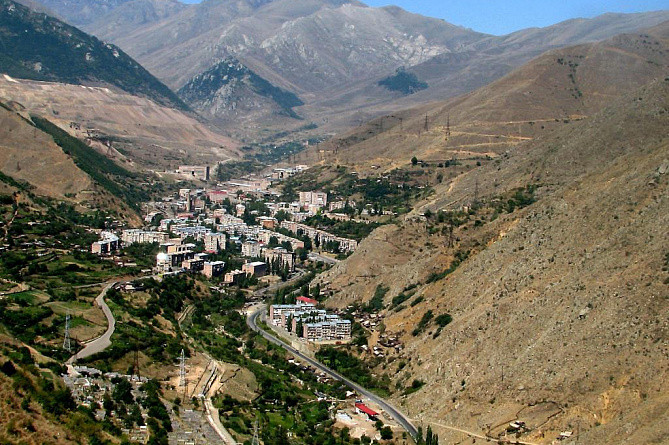
The construction of the Azerbaijani section of the railway to Nakhchivan that passes through the recently liberated territories is evidently being financed solely by Azerbaijan—at least there have not been any announcements suggesting the existence of other funds.
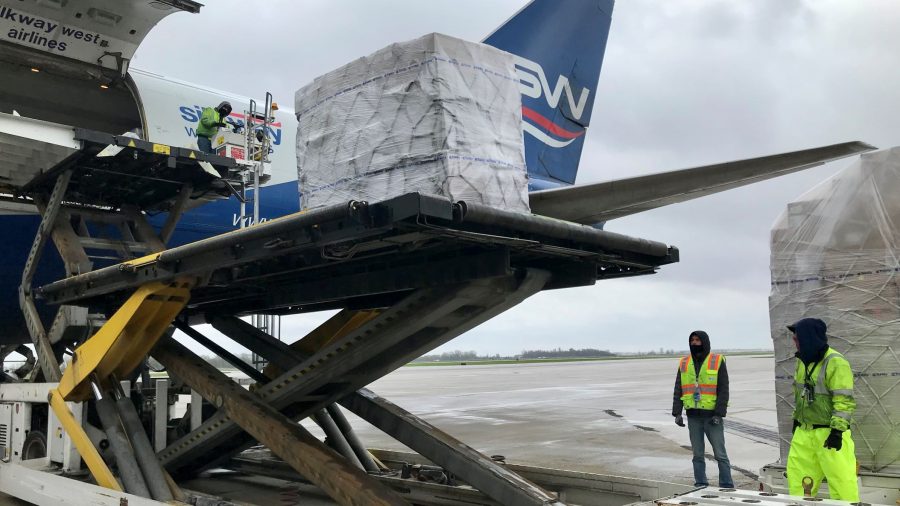
Azerbaijan-based Silkway West Airlines is the latest carrier to begin flying to Rickenbacker International Airport in Columbus, Ohio, a cargo-focused airport that recently marked the arrival of its 500th passenger aircraft with only cargo onboard.

25th International Exhibition for transport and logistics services, warehouse equipment and technologies, TransRussia 2021 took place in Moscow, Russia. The exhibition, which is held from April 12 to 14, is one of the largest transport exhibitions in Europe.

The unblocking of the Zangezur corridor will have wide-ranging geopolitical reverberations for both the directly concerned states, Armenia and Azerbaijan, and surrounding countries. For Azerbaijan, the reopening of the corridor has geostrategic significance in multiple domains.

The 5-Star COVID-19 Airport Safety Rating is a top recognition of the effectiveness of the hygiene and safety measures introduced at Heydar Aliyev International Airport to protect their customers and staff against the spread of coronavirus.

The Baku port last year handled 711.706 thousand tons of dry cargo, which is 2.8 times more than in 2019 and 3.5 times more than in 2015.

Since the start of the construction of the Horadiz–Agbend railway, however, the Azerbaijani and Armenian sides have voiced inconsistent messages about the prospects of the reestablishment of the Zangezur corridor.

A new rail line connecting Azerbaijan with its exclave of Nakhchivan promises to revolutionize transportation in the Caucasus and could have broad ramifications further afield.

With several months from the signing of the trilateral agreement which ended the Second Karabakh War, it is important to look at how various stipulations are being implemented. Below the focus is placed on the evolving connectivity patterns in the South Caucasus.


