Opinion99- Page

Opinion30 August 2021

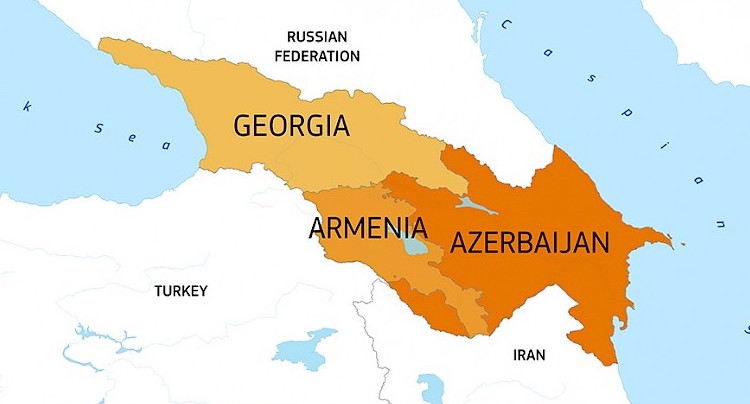
This paper covers the South Caucasus policy of Turkey after the 44-Day War be- tween Azerbaijan and Armenia in 2020. The aim of the research is to investigate the role of Turkey, which supported Azerbaijan politically and morally in the war, in the South Caucasus. This article concludes that, after this war, a new geopolitical situation has emerged in the South Caucasus region. In this new geopolitics, Turkish soldiers have been deployed, alongside those from Russia, in the Joint Monitoring Centre to observe the ceasefire in the Karabakh region of the Republic of Azerbaijan, and Turkey became a kind of guarantor of the liberated Azerbaijani territories through the Shusha Declaration signed between Turkey and Azerbaijan. Additionally, according to the trilateral statement of Azerbaijan, Armenia, and Russia that was signed on 11 January, it was decided to establish a new corridor that is planned to pass through Armenia to connect Turkey with Azerbaijan. Moreover, Turkey–Azerbaijan strategic relations have entered a new phase in terms of economic, military, and defence industry technologies. In short, after the 44-Day War, Turkey gained an advantageous position in the South Caucasus and Central Asia.

Opinion25 August 2021

Another Armenian myth is crumbling before our eyes. The most economically backward state in the South Caucasus, which has isolated itself from all major economic projects successfully implemented in the region. Armenia. A country heading towards a financial crisis and living on credit. Again, Armenia. The size of its external debt has already approached 70% of its GDP.

Opinion25 August 2021

The US Department of State released a report overviewing the current human rights situation in Armenia for the period from 2019 to 2021. It was compiled from the reports published by a number of international non-governmental organizations, including Human Rights Watch (HRW), Amnesty International, Freedom House, International Federation of Human Rights (FIDH), and contains references to the US Department of State, Human Rights Report 2020, 2020 EU Annual Report on Human Rights and Democracy, World Economic Forum and the United Nations Entity for Gender Equality and the Empowerment of Women (UN Women).

Opinion20 August 2021

Armenia’s recent general election saw Prime Minister Nikolai Pashinyan return to office with a substantially increased majority. Instinctively a moderate and pragmatic voice, Pashinyan has in the past found himself having to make concessions to his own ‘ultras’ whose only vision for their nation is one of isolation and eternal grievance against Turkey.

Opinion18 August 2021

The November 2020 and January 2021 declarations of the presidents of Armenia, Azerbaijan and Russia called for the unfreezing of transportation routes including most importantly the one between Azerbaijan and Azerbaijan’s non-contiguous autonomy, Nakhichevan, and between Armenia and Iran.

Opinion16 August 2021

On Saturday (!), August 14, 2021, President of Poland Andrzej Duda signed the “restitution law”. Whether it was a deliberate act or a coincidence, but it was on a day sacred for the Jewish people that the surviving prisoners of Nazi death camps, as well as descendants of the six million Holocaust victims, who live today across a vast territory from Canada to Australia, found out that Poland took away their right to compensation and reclamation of the property confiscated from their families in the Holocaust and after the war.

Menu Search Dark Mode Light Mode
Loading

Signing-in 3 seconds...

Signing-up 3 seconds...