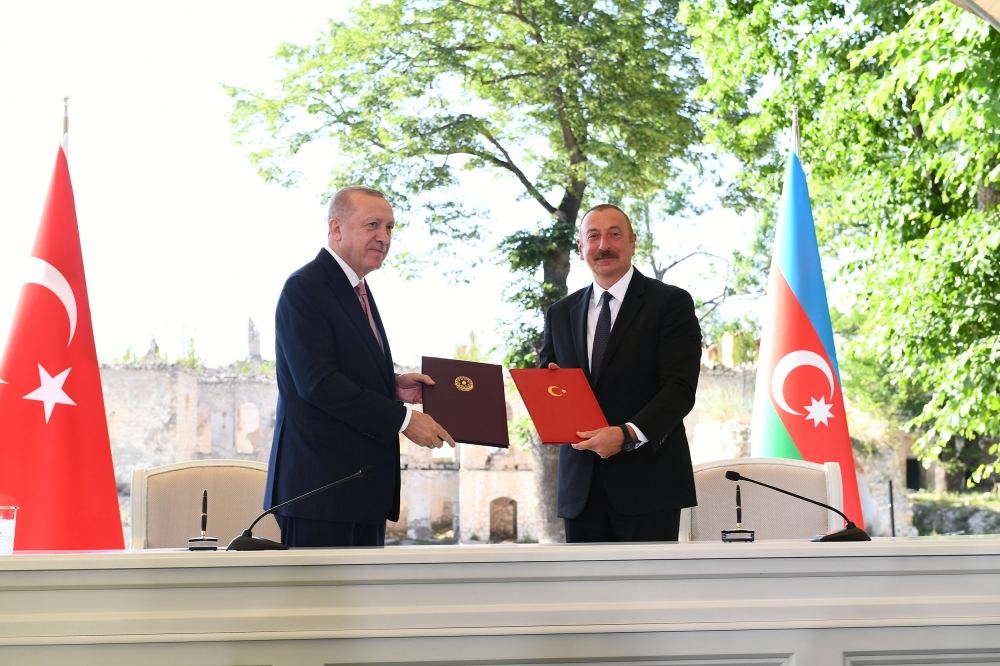
The full text of the Shusha Declaration on Allied Relations, which was signed June 15 by Azerbaijani President Ilham Aliyev and Turkish President Recep Tayyip Erdogan in the city of Shusha, has been published.
It is no surprise that Azerbaijani and Turkish leaders and analysts are suggesting that the Shusha declaration signed today by Presidents Ilham Aliyev and Recep Tayyip Erdoğan is historic or that Armenian commentators are denouncing it as Turkish interference in the region.
Moscow is closely monitoring developments around a potential Turkish military base in Azerbaijan, a move that could require Russia to take steps to ensure its own security and interests, the Kremlin said on Friday.
Since the end of the Second Karabakh War and the signing of a ceasefire agreement on Nov. 9, 2020, Turkey and Russia have co-existed in Azerbaijan in a joint monitoring center and Russian “peacekeeping” forces in northern Karabakh.
Outside the town of Agdam, in the foothills of Nagorno-Karabakh, trucks and tank carriers had left tracks in the muddy road. Bomb craters and mangled military vehicles hid in the fog. Artillery dugouts lay behind a defensive embankment, some still covered with camouflage netting. In Soviet times, these fields were state-owned vineyards whose grapes produced a fortified white wine named after the nearby town.
The Shusha Declaration signed this week between Turkey and Azerbaijan will strengthen unity in the Turkic world, the head of the International Turkic Academy said on Thursday.
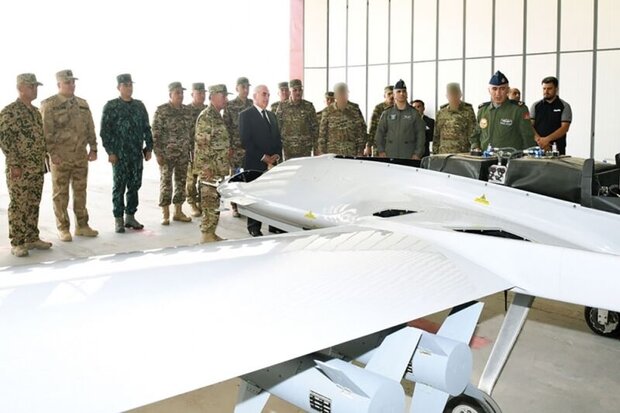
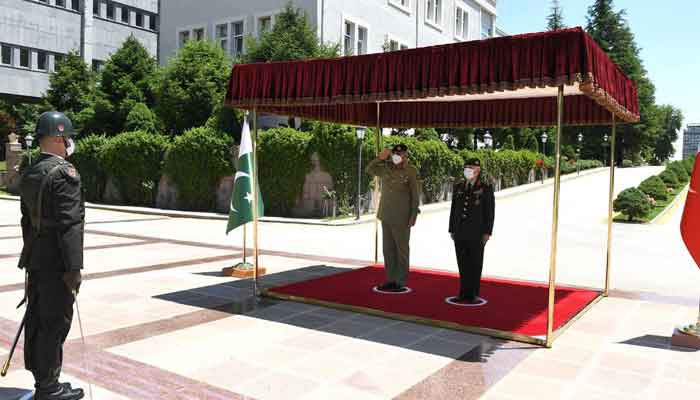
A delegation of Pakistan Air Force led by Air Vice Marshal Tariq Zia held a meeting with Deputy Minister of Defense of the Republic of Azerbaijan – Commander of the Air Force, Lieutenant General Ramiz Tahirov on Thursday.
Despite some improvements in the work of municipalities, major concerns remain about a number of factors impairing the development of self-government in Azerbaijan, such as a lack of real powers of municipalities, of a status of state institutions and of own financial resources, says the monitoring report of the Council of Europe’s Congress of Local and Regional Authorities which also provides a number of urgent recommendations to the authorities.
On June 20, Armenia’s citizens will be heading to the polls for a second snap parliamentary election in less than three years. While the December 2018 snap election was held in the aftermath of a popular revolution and brought Nikol Pashinyan to power, the forthcoming election is taking place against the backdrop of a disastrous six-week war with Azerbaijan and the continued demands by opposition groups for Pashinyan’s resignation.
The corresponding consultations on settling the border dispute will continue, Foreign Ministry Spokeswoman Maria Zakharova said.
Moscow believes it will be wrong to mix the Nagorno-Karabakh settlement-related issues with the relations the region's countries have with other states, Russian Foreign Ministry spokeswoman Maria Zakharova said when asked about Azerbaijan's latest summit level contacts with Turkey.
Azerbaijan may become one of the new sources of gas supplies to Ukraine in order to strengthen its energy security.
Turkish President Recep Tayyip Erdogan plans contacts with his Russian counterpart Vladimir Putin, Erdogan told journalists Thursday after returning from Azerbaijan.
The 20 June Parliamentary elections in Armenia are the most competitive and inclusive in the country’s history with three former presidents challenging the rule of incumbent prime minister, Nikol Pashinyan. In a detailed analysis for commonspace.eu, Alexander Petrosyan looks at the main protagonists and what they stand for and what is important to watch for on election night.
Turkish Petroleum Corporation (TPAO) and the State Oil Company of the Azerbaijan Republic (SOCAR) could work together in field development and production of Turkey's giant gas discovery in the Black Sea, Vagif Aliyev, deputy chairman of SOCAR Turkey told reporters.
Saleh Doostaliyev, an Iran expert with the Institute of Oriental Studies of Azerbaijan National Academy of Sciences, made the remarks in an exclusive interview with IRNA.
Armenians vote Sunday (20 June) in snap parliamentary elections called by Prime Minister Nikol Pashinyan to end a political crisis ignited by his country’s humiliating military defeat to Azerbaijan last year.
Khyber Pakhtunkhwa Minister for Local Government, Elections, Rural Development, Parliamentary Affairs and Human Rights, Akbar Ayub Khan has called for increasing exchange programmes with Azerbaijan.
Ilham Aliev associates multiple mine explosion casualties among civilians and military personnel after the end of the war in Nagorno-Karabakh with the fact that Baku did not have maps of minefields.
Turkey's Recep Tayyip Erdogan was the first foreign leader to visit Karabakh since the end of last year’s war, in which Turkish backing helped Azerbaijan secure its victory.
The first serious challenge and weakness of the Iranian plan is Yerevan’s opposition to it. For Armenia, the Karabakh conflict is still a matter of national defeat, and the nation is yet to absorb the new reality.
Nonetheless, a week prior to Armenia’s parliamentary elections, a major breakthrough had, in fact, been achieved between the two conflicting states. This development has the potential to positively contribute to the emergence of a constructive environment for negotiations over other issues, including transportation projects and a settlement of the shared border.
In the last three decades, the Armenia-Azerbaijan conflict over Karabakh has had a significant impact on the geo-economic situation in the South Caucasus. In the early 90s, the illegal territorial claims of Armenia against Azerbaijan led to the First Karabakh War and resulted in the occupation of 20% of internationally recognized territories of Azerbaijan.
Azeri oil exports through the Baku-Tbilisi-Ceyhan (BTC) pipeline via Georgia and Turkey fell by 11.2% year on year to 11.1 million tonnes in the first five months of the year, the State Statistics Committee said on Wednesday.